“Five kids were killed by a grenade in Kodok town today! Tomorrow morning UNICEF and I will be going to Kodok town to investigate the case, are you coming?” my friend, JV, who’s working as Humanitarian Affairs asked me.
I was shocked to hear about it and without any second thought I said, “Yes,” immediately!
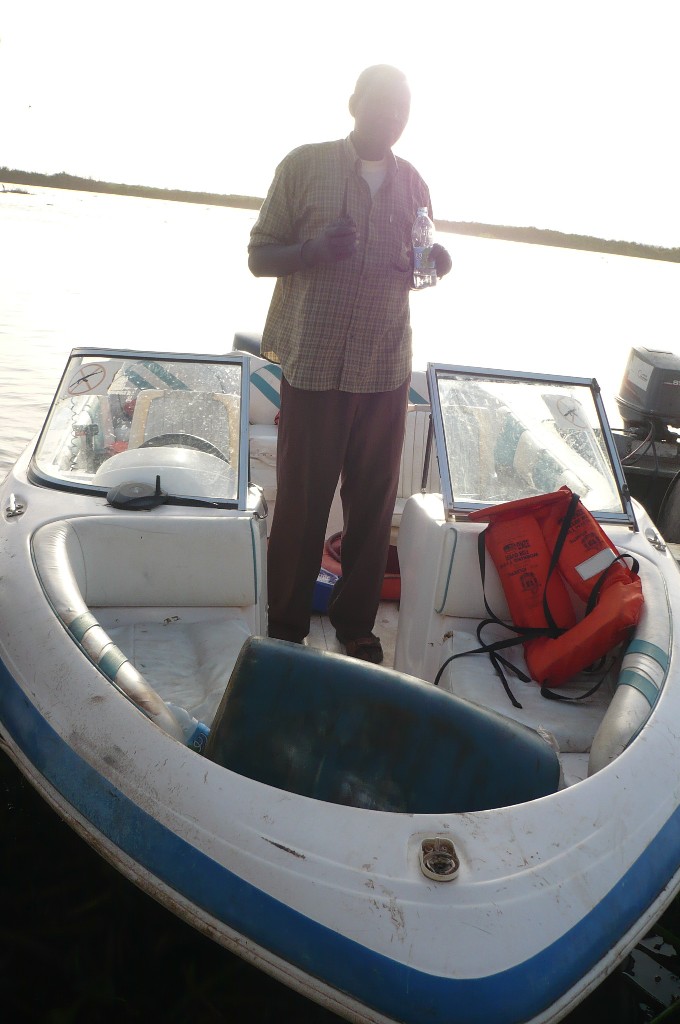
On the next day we departed from Malakal at 9.45 a.m. with a small motor boat that only fits for seven people. Luckily we were seven including two UNICEF staff, one staff of UNMAO (United Nations Mine Action Office), two from UNMIS (JV & I), one from Mine Tech Demining Company, and the boat driver.
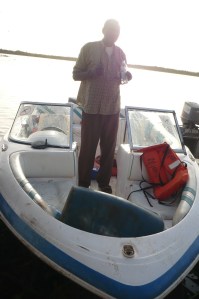
Here's our small motor boat
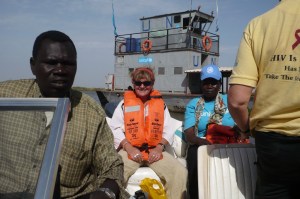
JV is ready for a boat ride!
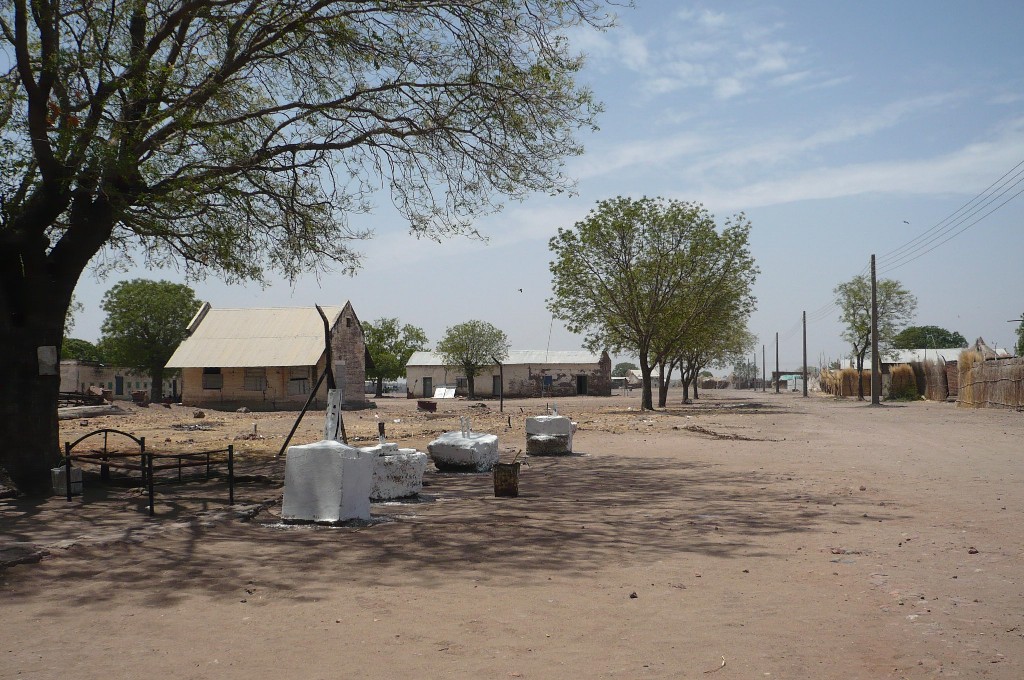
Kodok is about 90 minutes up to the north from Malakal by boat. It lies on the Nile River bank. It’s a Shiluk tribe area, the population is approximately 6,000 people and most of them are fishermen and farmers.
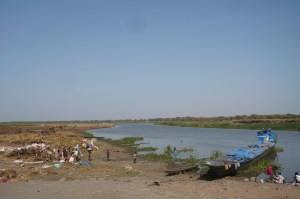
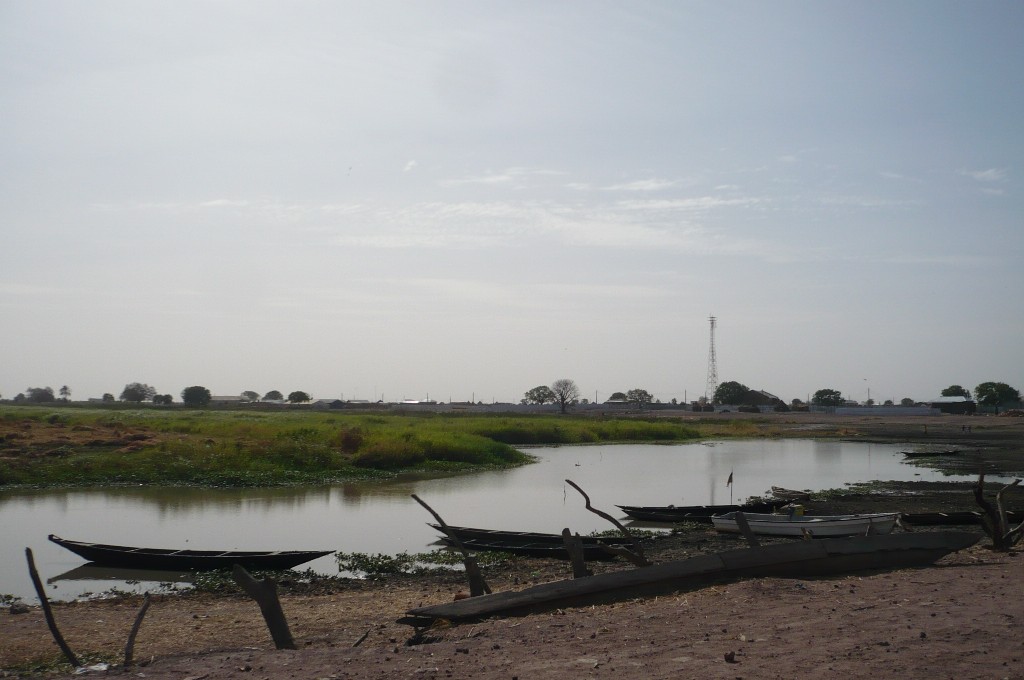
Kodok town lies on the Nile River bank
Kodok is one of towns in Fashoda county, Upper Nile state. There are three towns within Fashoda county: Kodok, Lul, and Ditwok. Kodok is the county headquarters where the county commissioner governs from.
Fashoda county is one of the most historical places in Africa. This was the place where the territory dispute between France and United Kingdom happened back in 1898 and it is well-known as “Fashoda Incident.”
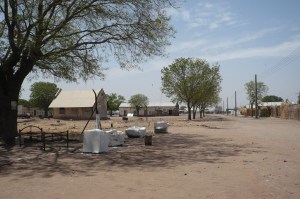
Kodok town is the capital of Fashoda county
The history begins…
If you study African history I bet you know the term of “Scramble for Africa.” It was the period where Africa was rapidly being occupied by European colonial powers during 19th century and this involved United Kingdom and France including Portugal, Germany, and Belgium.
France and its allies colonized the African interior from Senegal, Mali, Niger, to Chad. Their ultimate goal was to have an uninterrupted link between the Niger River and the Nile, to control all trade to and from the Sahel region through Sahara. The Sahel is the zone of transition between the Sahara desert in the North and the Sudanian savannas in the south. It stretches across the north of the African continent between the Atlantic Ocean and the Red Sea.
The British wanted to link their possessions in Southern Africa with their territories in East Africa, and these two areas with the Nile basin. Sudan was the key to the fulfilment of these ambitions, especially since Egypt was already under British control.

Kodok town
British planned to draw a railway from Cape Town to Cairo and French had an ambition to control the trade from Dakar to Djibouti. These two lines intersect in eastern Sudan near the town of Fashoda or now it’s known by Kodok, explaining its strategic importance. The French east-west axis and the British north-south axis could not co-exist; the nation that could occupy and hold the crossing of the two axes would be the only one able to proceed with its plan.
In July 1898, a French Major, Jean-Baptiste Marchand, led 150 soldiers to enter the ruined Egyptian fort of Fashoda to establish French presence in Upper Nile. On September 18, 1,500 British troops in a powerful flotilla led by Sir Herbert Kitchener reached Fashoda in order to reclaim the whole of the Sudan for Egypt and Britain.
First both Britain and France were polite but insisted on their right on Fashoda. Marchand refused to surrender the fort although he was heavily outnumbered. The crisis continued until October and both nations were about to prepare themselves for a war. But then Britain and France were well aware that this battle would bring a wider consequence and at the same time people increasingly began to question the wisdom of war for the sake of such a remote part of Africa.

Fashoda along the Nile River
Finally the compromise was made. The French’s flag will remain above the fort; the Egyptian flag will fly from a nearby tree; and they will leave the wider issue to the politicians.
By the end of the year the French government decided to withdraw Marchand and his men from Fashoda because they were much distracted by the Dreyfus affair, it was a political scandal that divided France in the 1890s and the early 1900s.
In March 1899, the French and British agreed that the source of the Nile and the Congo rivers should mark the frontier between their spheres of influence. This was the last serious colonial dispute between Britain and France.
OMG…!!!
I never thought that I stepped my foot on one of the historical land in Africa continent!
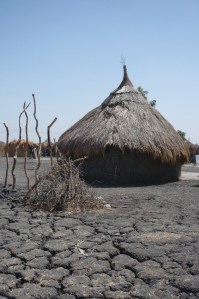
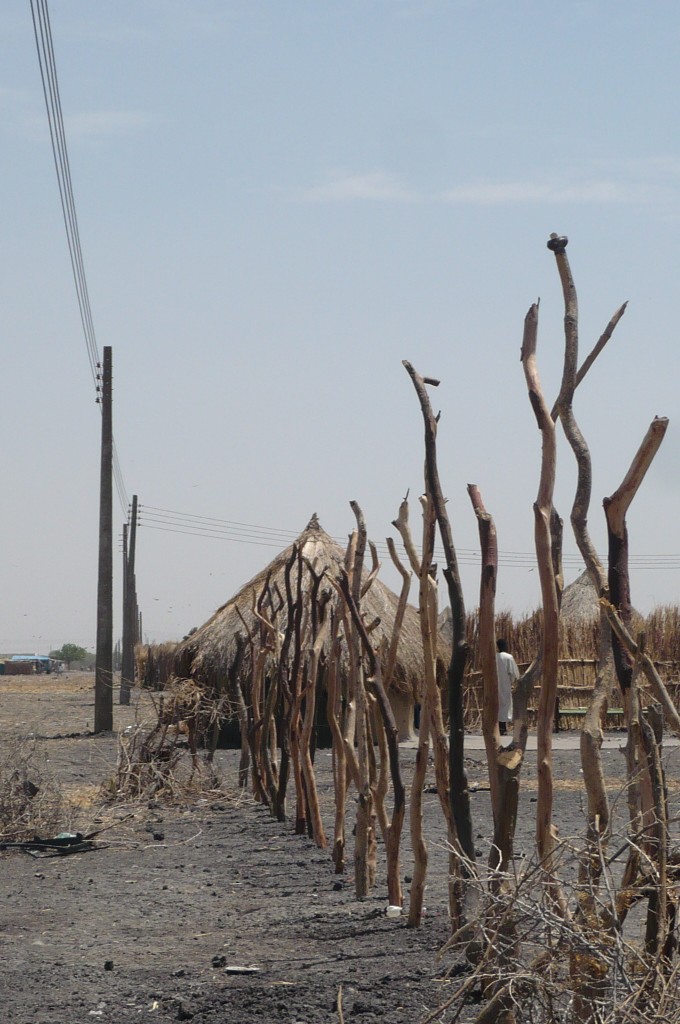
Tukul, the traditional house of South Sudan
Back to the present day…
On the way to Kodok, for the first 25 minutes, I sat on the front seat of the boat right in front of the driver’s seat. The wind was very strong that morning so the current was fast, I felt like riding in a rollercoaster & sitting on the front row! The boat speed just perfectly added the thrill of the journey, I was so scared that I might be thrown out into the river because there was no seat belt available that can hold me tight on my seat.
Fortunately something was wrong with the machine so the driver must stop the boat and checked on the fuel tank whether the fuel was still available. I quickly asked my colleague from UNMAO, RI, to switch the seat therefore I could calm myself down and enjoy the boat ride.
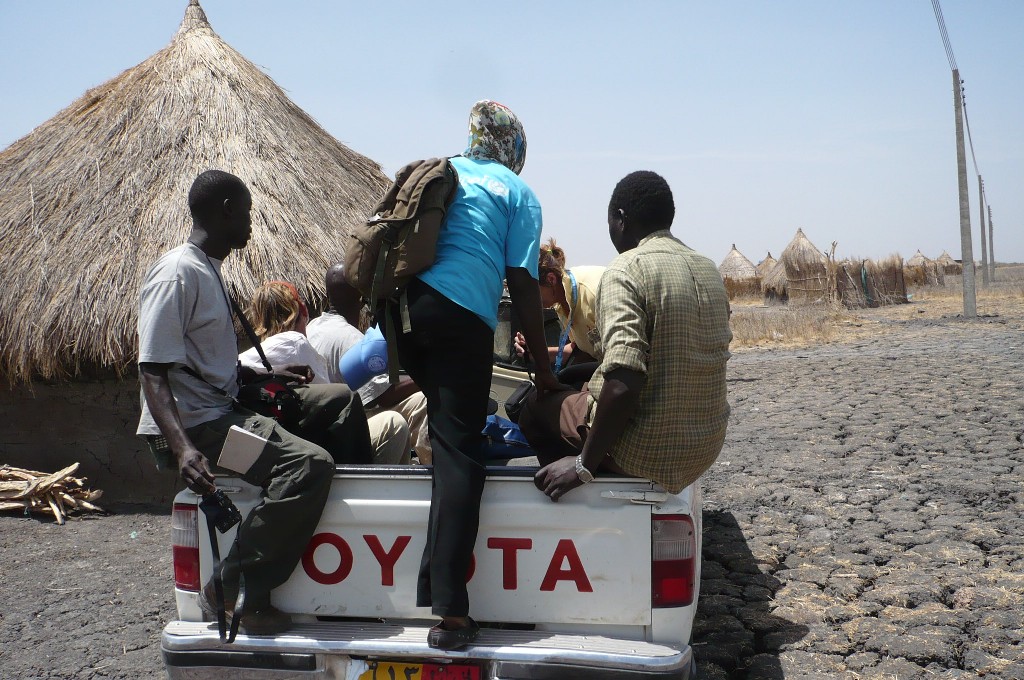
We arrived in Kodok on 11.30 a.m. and for the next five hours we sat on the pick-up that was provided by the local authority to take us to see the families of the victims as well as to visit the areas where landmines and UXOs (unexploded ordinances) were still lying around on the ground waiting to be cleared up.
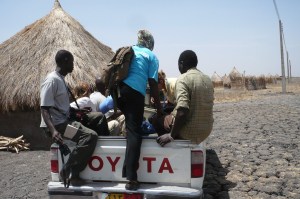
We were transported by a pick-up during the visit
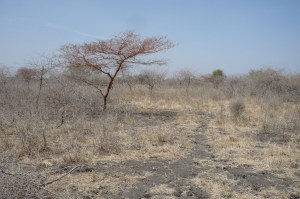
This was used to be a war zone, now you may find landmines & UXOs here
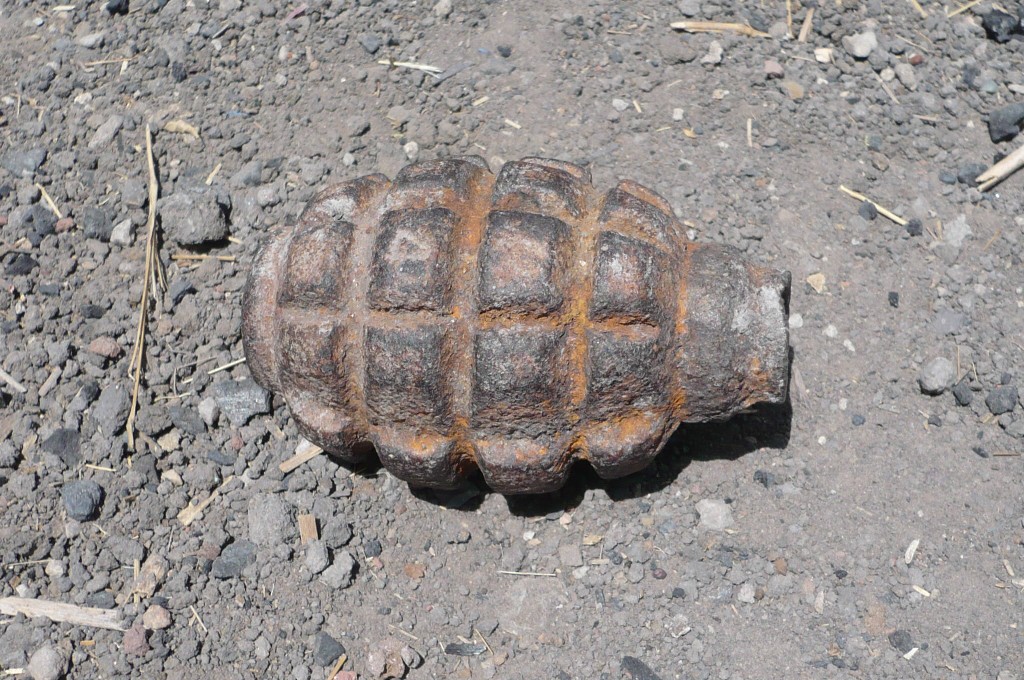
We found two other old grenades that day and when I asked to the local authority why there are so many landmines and UXOs in this area, he said that Kodok was used to be the battle zone between Sudan Armed Force and Sudan People Liberation Army back in 1980s to early 2000s.
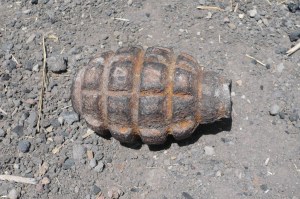
Is this American grenade?

What about this one?... Asian made?...
The weather was very hot that day, although I already wore my big blue hat but still it couldn’t prevent me in getting sun-burned. My skin is completely tanned now and my face is like a tomato.
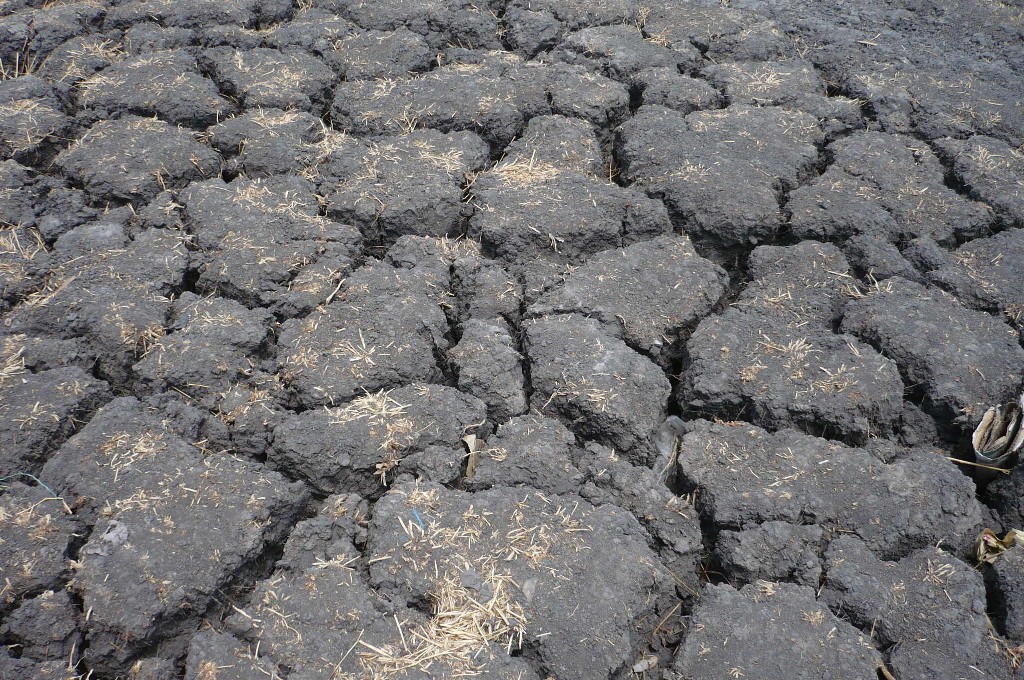
Because of hot weather the land was cracking, I assume the rain has not come for months there. However, I can’t imagine if the rain is suddenly pouring because it would have been very muddy.

Land is cracking during dry season
Although we could hardly find infrastructure which is common condition in Southern Sudan, but some basic facilities such as schools, medical centre, and clean water point are available in Kodok. I also saw some electricity and telephone network’s towers to be built up there.

City power towers are already in town
We ended our visit by meeting the only non-government organization (NGO) that is based in Kodok, Tear Fund. Tear Fund is a British NGO that supports in health area. They have several health projects in Fashoda county such as HIV, malaria, nutrition, and maternity. Tear Fund has expressed their cooperation to support UN in landmine awareness dissemination to the people of Fashoda county especially the children.
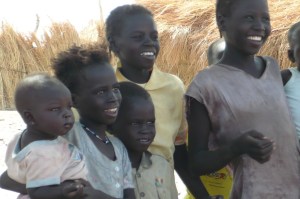
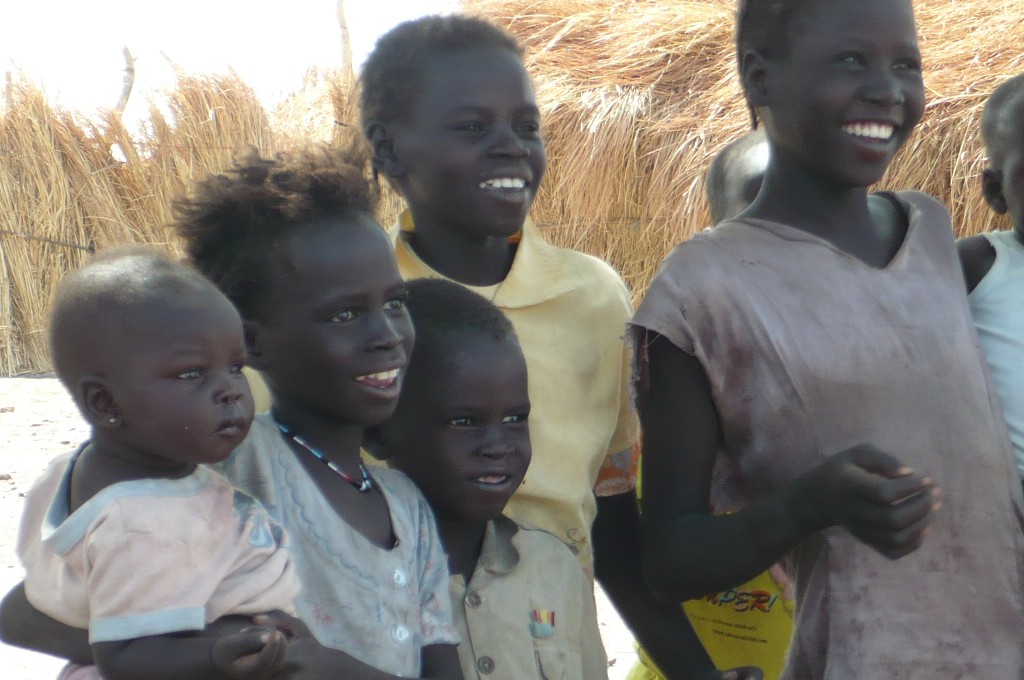
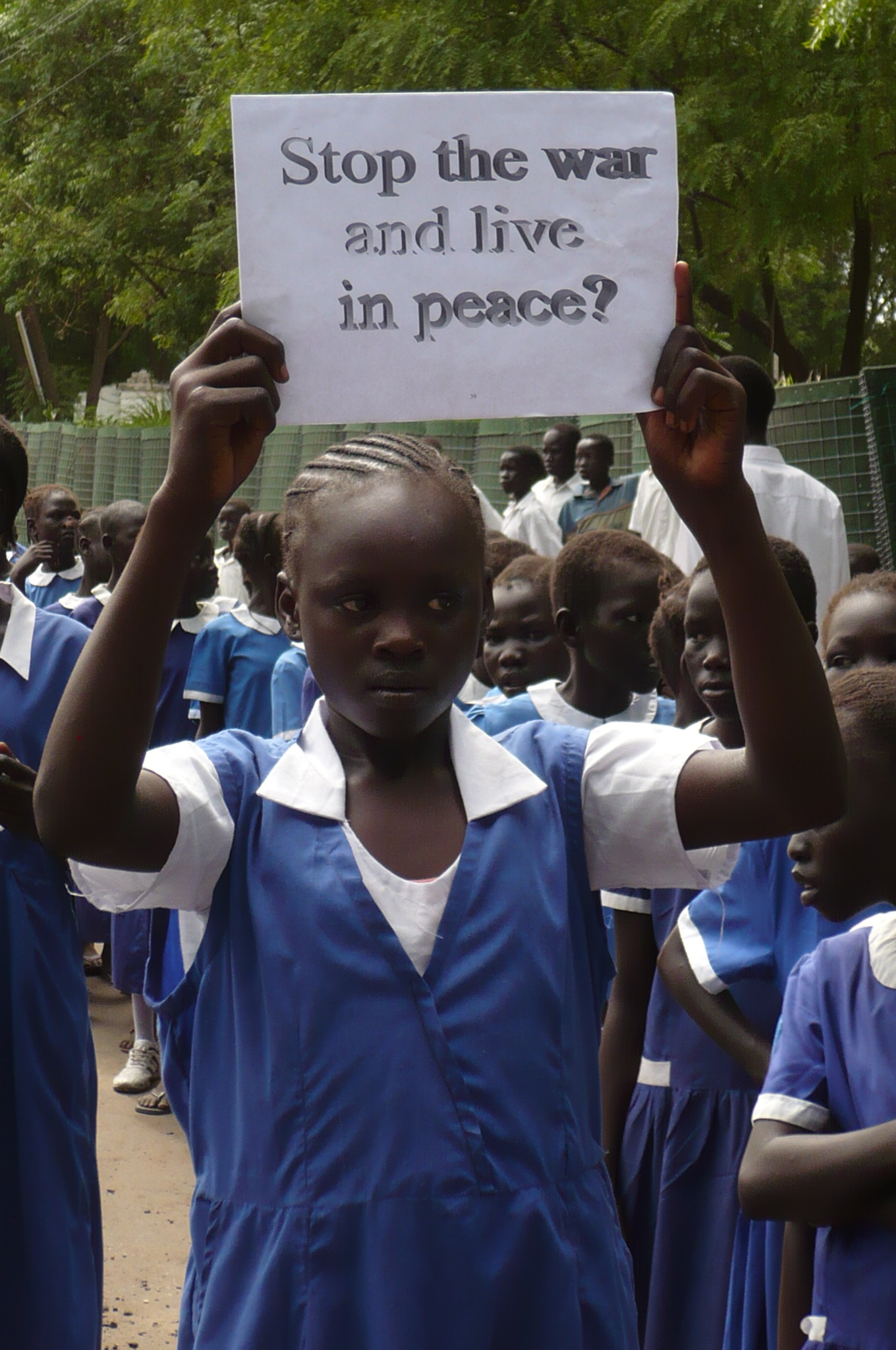
Five children were killed by a landmine and no more children will becoming victims anymore!
We returned to Malakal at 5.30 p.m. and had a boat ride for another 90 minutes but this time the wind was calmer so we could enjoy our sunset boat ride as if we were on the Nile sunset cruise… Beautiful!!!

Sunset view along River Nile on the way back to Malakal
Sites cited on “Fashoda Incident” : African History & Wikipedia.
This story was published at http://pralangga.org – Our Peacekeeping Journey under the same title.
Read Full Post »









 The Window...