I have been into so many field trips before but this was my first trip to Melut and Renk counties. My one week trip to those counties has taught me an important lesson about life.
11 March 2010…
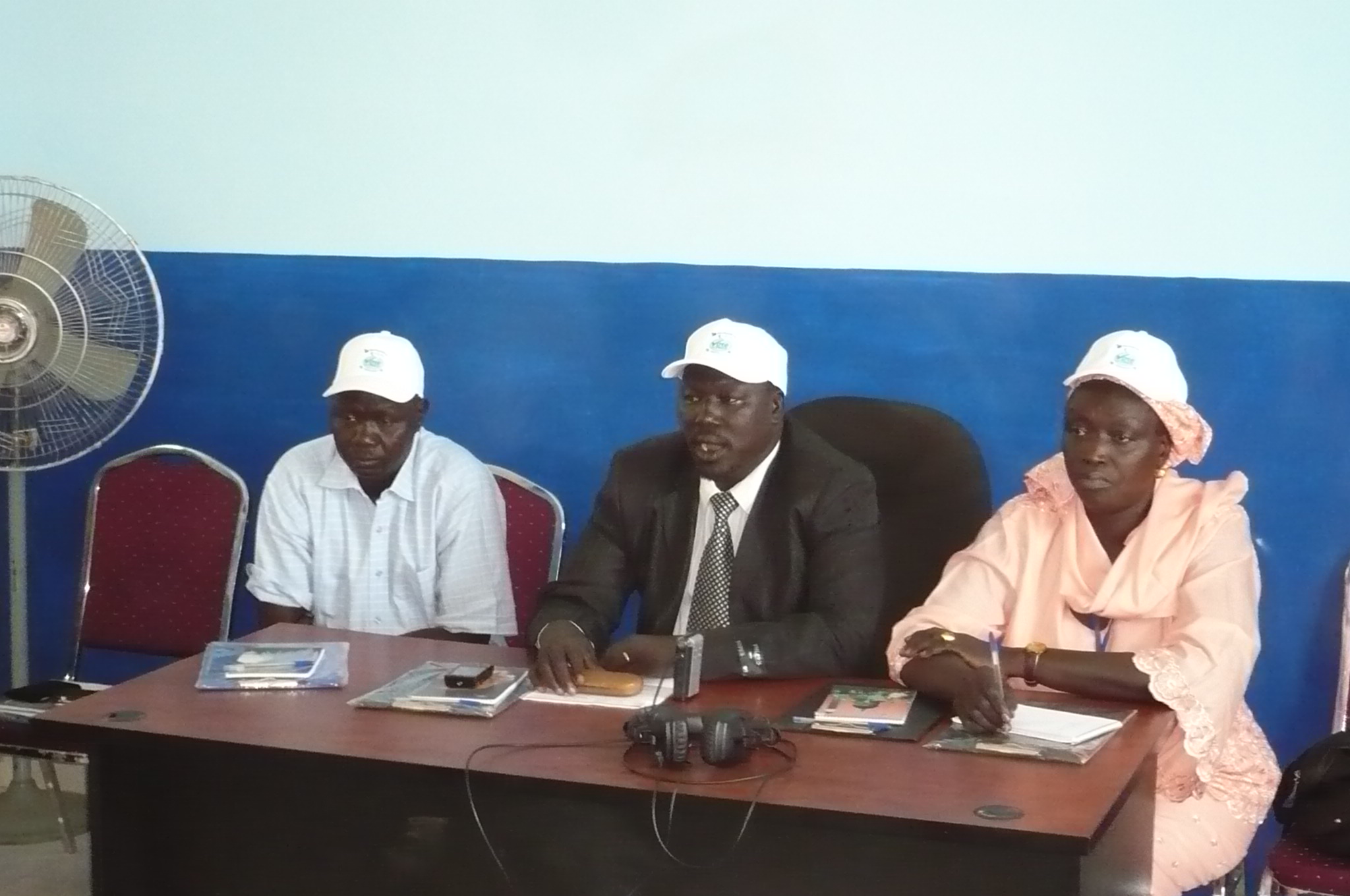
My colleagues from UNMIS Civil Affairs, Human Rights, Radio Miraya FM, and myself from Public Information Office departed from Malakal town to Melut county (also in Upper Nile State) to support the Upper Nile State Minister of Parliamentary Affairs, BA, and the Election High Committee member, TA, to conduct political parties’ round table in Melut and Renk counties..
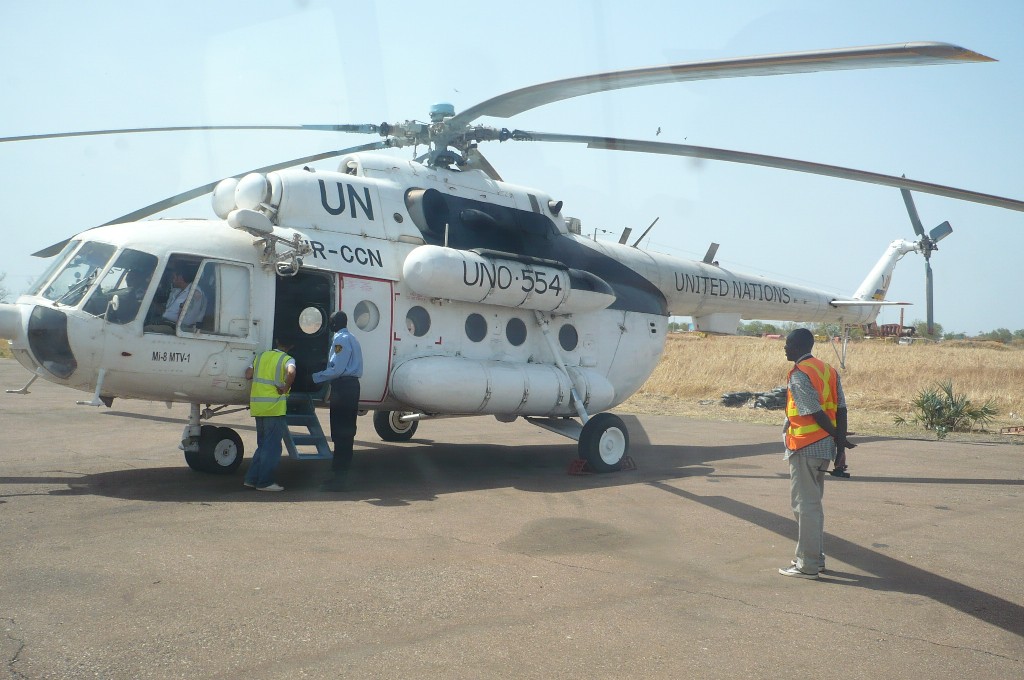
Six of us went by MI-8 helicopter in the morning at 11.15 a.m and it took only 35 minutes from Malakal to Melut. We arrived in Melut at 11.50 a.m. and as soon as we landed our colleague from UNMIS Civil Affairs in Melut office, AA, took us to see the Melut County Commissioner for a courtesy visit.

Malakal to Melut is 35 minutes by MI-8 helicopter
The Minister and the High Election Committee member were accommodated by the Commissioner at the government officials’ guest house. For the rest of us, we stayed at the UNMIS accommodation, basically it was just moving into another container.
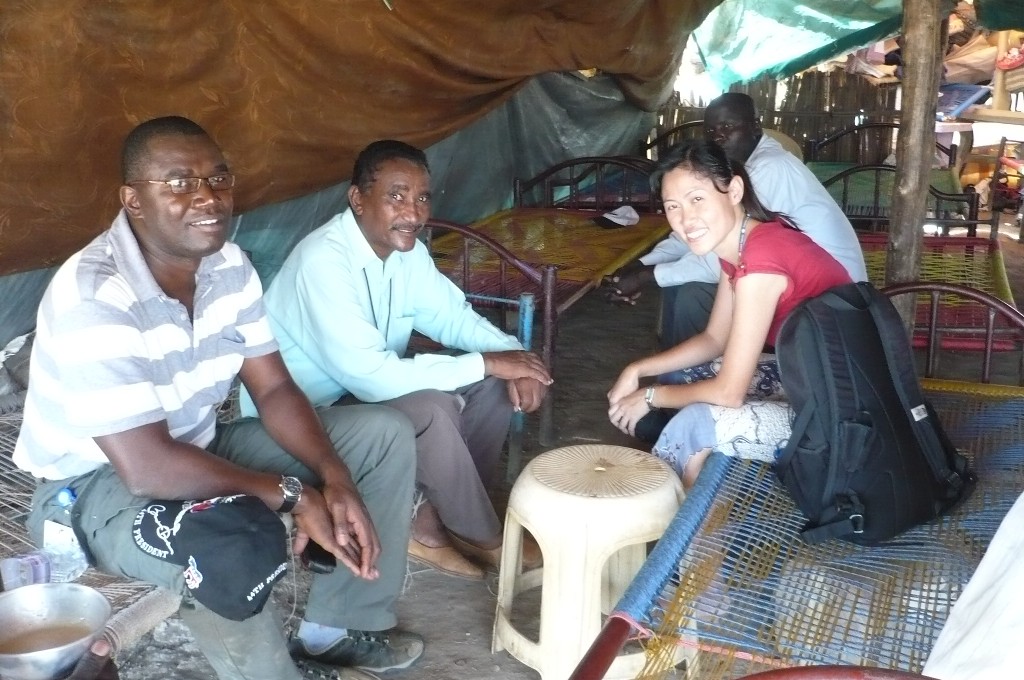
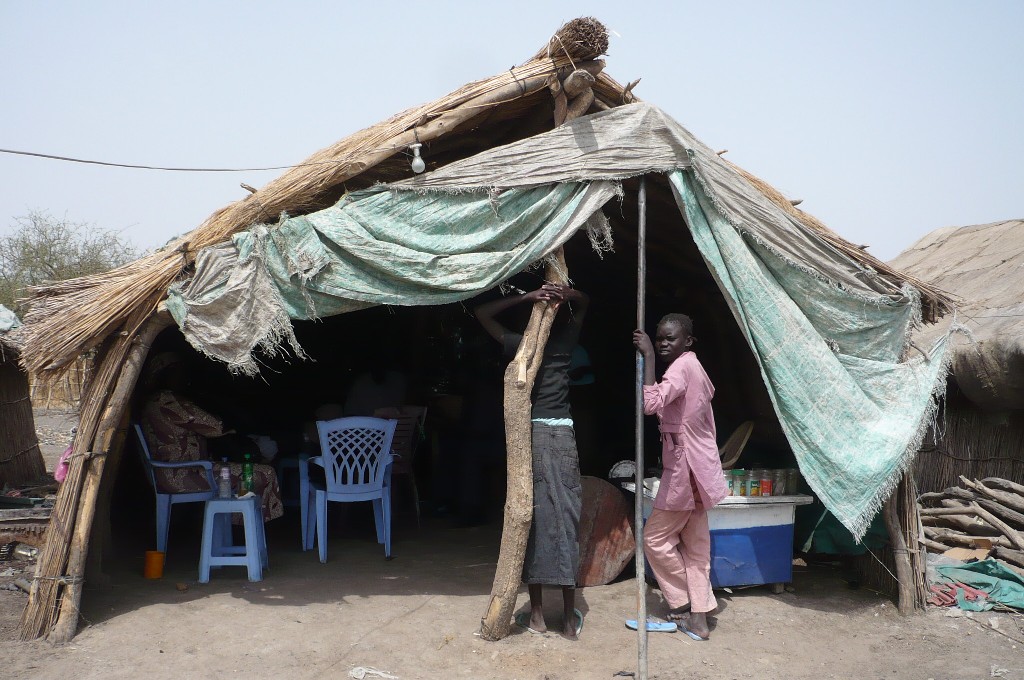
The temperature was boiling that day I felt it was even hotter than Malakal! After checked-in to our accommodation we went to town for lunch. AA took us to a local restaurant where he used to have his lunch. The restaurant was not really a restaurant, it was a small tent with a lot of beds in it. When I asked what these beds are for? AA said that this tent will be used as a ‘hotel’ at night where people can just sleep in one of those beds and they pay 5 Sudanese Pounds (USD$2) per-night. “Hmmm… Strange,” that was what I thought at that time but never crossed my mind that I would experience it, soon after that.

We are waiting for our lunch. This tent is a restaurant during the day and a hotel at night
The food that they served was a typical Sudanese food: roasted goat meat (Shaya) and another one with soup (Kebab), Egyptian peanuts with lots of oil, scrambled eggs, tomatoes-onions salad, and some bread. After lunch we went to the market to buy some bottles of mineral water, coca colas, and some fruits like bananas, and oranges.

Sudanese food: shaya, kebab, Egyptian peanuts, scrambled eggs, salad, and bread
12 March 2010…
The political parties’ round table was held therefore we were busy all day…
13 March 2010…
We had our journey to Renk county by road. We went with two vehicles. We started our journey from Melut at 10 a.m. and arrived in Renk at 2.30 p.m. It was quite long drive, 4.5 hours! Actually it was not that long if we went straight without stopping over for a couple of times. Renk county is 180 kilometres north from Melut so if you drive 60 km/hour you should arrive in Renk in three hours only.
The Minister…
First stop was at the tea place, the Minister said that he has yet to get his breakfast. We stopped in an area about an hour drive from Melut. We accompanied the Minister for tea. For Sudanese, to have tea in the morning is like a ritual. Later on I found out that tea helps their body to deal with the heat during the day.

The tea place
My first impression about the Minister was he is a ‘down to earth’ person. He is considered as a high level government official in Upper Nile State, Southern Sudan but he didn’t wish to be treated exclusively. He didn’t hesitate to sit in a modest tent a long the dusty road on the way to Renk to enjoy his tea. He spoke conveniently to the tea lady as if he weren’t a minister and I wondered whether the tea lady was aware that she just talked to one of the prominent leaders in her state.

The Minister (on the third from the left) enjoyed his morning tea
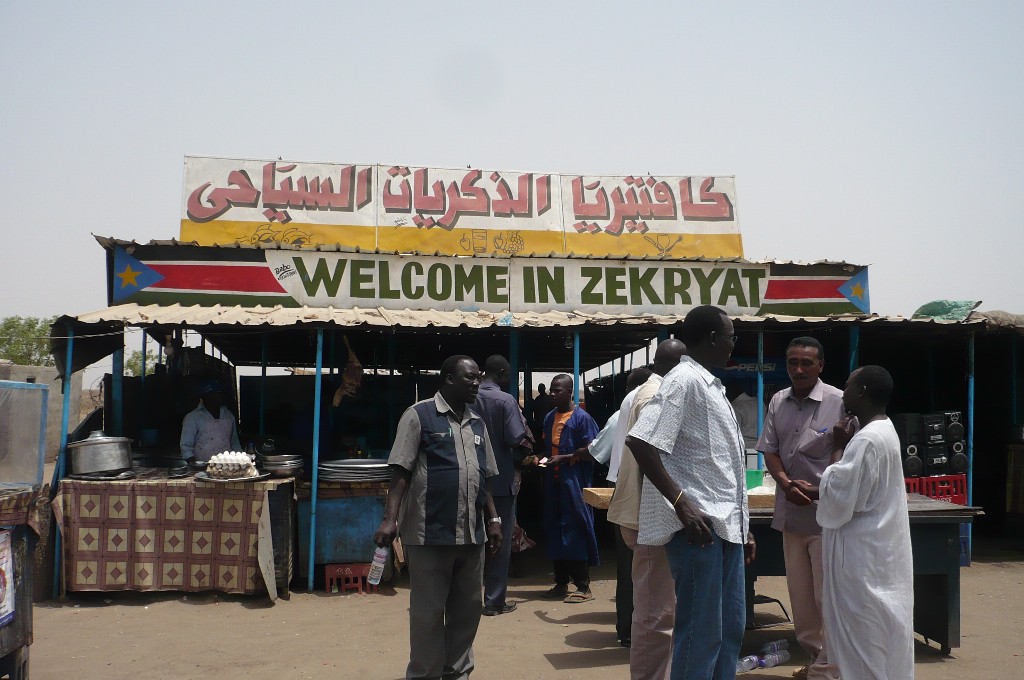
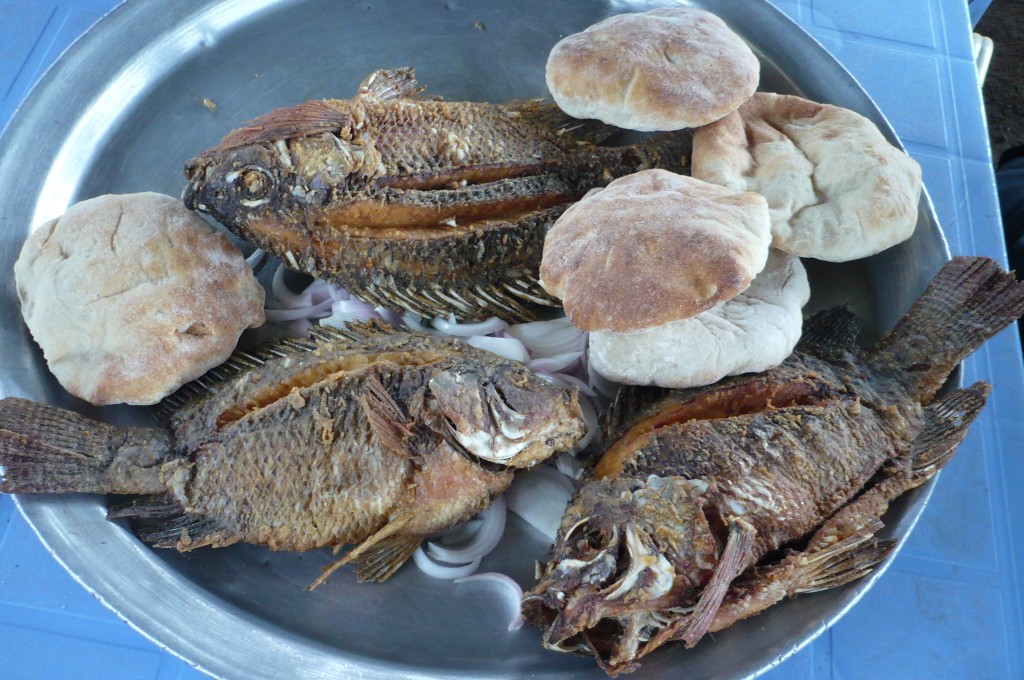
After having tea we continued our journey and 1.5 hours later we stopped for having lunch at a restaurant called Zekryat. The restaurant was pretty big for suburban area and the Minister was very impressed with it. My colleague from Civil Affairs, AK, and I had an opportunity to sit on the same table with the Minister and the State Election High Committee member. We ordered fried tilapia fish (typical Nile River fish) and bread with some onions and lemons.

Welcome in Zekryat

Lunch of the day: Tilapia fish, bread, onions, and lemons
The Minister and I had a chance to have small conversation at that time. He told me that he came from a county in Upper Nile State called Maiwut (it’s near Melut). He studied in Ethiopia and returned to Sudan in 1987 to join Sudan People Liberation Movement (SPLM). I asked him whether he is running for this time elections, he said it’s not the time yet for him to contest. He will wait until after the South Sudan referendum.
The Minister asked me some questions about Indonesia and he was interested in the democracy system of Indonesia. He would like to request the Government of Southern Sudan (GoSS) to send him to Indonesia one day to learn about Indonesian’s democracy.
We spent about an hour to enjoy our lunch. We departed Zekryat around 1.30 p.m. We drove for about an hour and finally arrived in Renk.
Renk is a big town, it was like Malakal and even cleaner, so impressive! The market was big and it opened until 11 p.m. There were so many local restaurants and they had some interesting food such as burgers. That evening I had local egg burgers for my dinner. What makes me more impressed was the electricity and clean water are available in whole Renk. These are more than Malakal I guess.

Welcome to Renk county in Upper Nile State

Renk market opens until 11 p.m. daily

Egg burger ala Renk
Unfortunately Renk doesn’t have sufficient and proper commercial lodgings. As usual, the Minister was accommodated by the County Commissioner at the government officials’ guest house but the rest of us had a hard time in finding accommodation until we found a guest house run by a local church. The guest house was very small, it was just a house and divided into four rooms. There were three to four beds in each room and you can just pick one of the beds where you can sleep in with 20 Sudanese Pounds per-night (USD$8). This reminded me to the small tent restaurant where we had our lunch on the first day in Melut.
The weather was very hot that day and even in the evening, everybody moved their beds outside but me. It was indeed very hot inside and there was no fan in the room where I slept in but I didn’t want to risk myself in getting malaria so I was just sleeping tightly inside my sleeping bag that night… No complain!
14 March 2010…
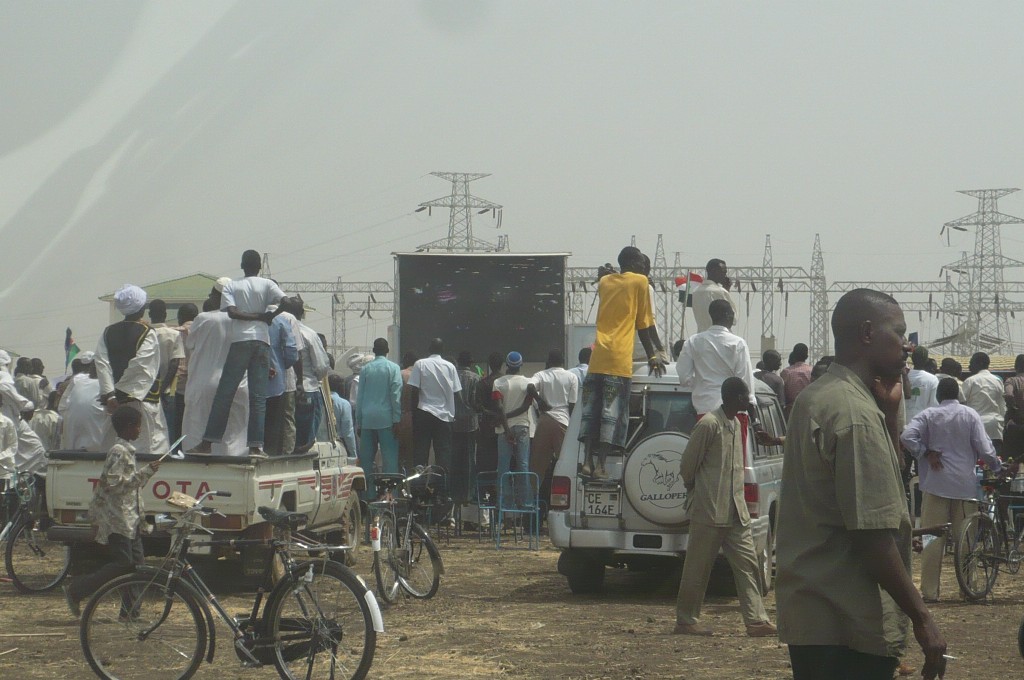
That Sunday was a special day for Renk people. The President of Sudan, Omar Al-Bashir, was in town to inaugurate the city power commission. On the same day the SPLM party launched their campaign and the President of Southern Sudan, Salva Kiir Mayandit, was supposed to arrive in town as well (But he changed his mind and went to another county instead). Many Upper Nile State government officials came to Renk to participate the city power inauguration including the Upper Nile State Governor, Deputy Governor, and some of the ministers.
My colleagues and I went to the inauguration but there were too many people there so we gave up and returned to town to look for another accommodation because the guest house where we stayed at was too public, it was too many people coming and going, we couldn’t rest at all.

The crowd on the city power inauguration
The Lady of the State Election High Committee…

Madame TA
We went to a small but clean cafeteria called Esther’s Cafeteria, it belongs to an Episcopal Church. They served very tasty local food, I can’t explain it very well but TA, the lady who is a member of the State Election High Committee, said that it’s made from some wheat and the food is called “Wala-Wala” in Dinka (tribe) language.

Wala-Wala
TA was from Shiluk tribe but she married a Dinka. She was a teacher for 27 years in Sudan and later on she joined Sudan Civil Aviation as an Assistant Manager. Now she is given special leave because the Sudanese government appointed her as one of the Upper Nile State Election High Committee members and in fact, she is the only female member in the committee.
Although she is originally from Malakal but she spends most of her life in Khartoum and Northern Sudan. Even she studied in Egypt for five years in 1983 to 1988. Her late husband was a minister in one of the northern states of Sudan. He died in a car accident 16 years ago. They got two daughters who are now studying in Khartoum and Juba universities.
“It’s not easy to raise children alone but I know I’ll be proud when I see my children are successful one day,” that was TA said to me and I couldn’t agree more with her.
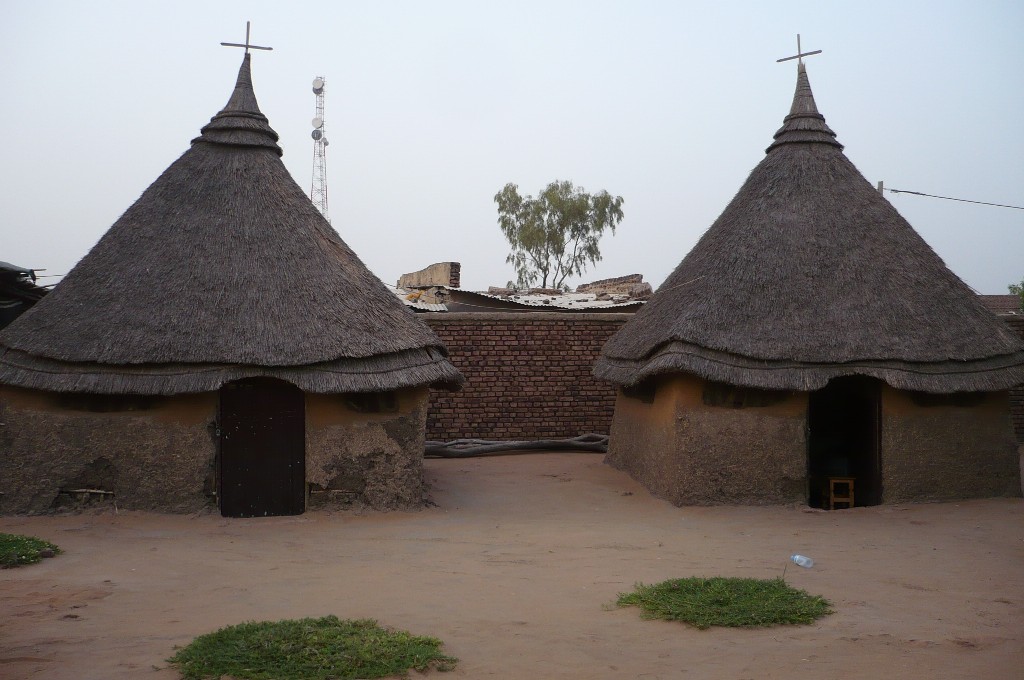
After having a small culinary tour together, TA, my colleague, AK, & I tried to find out whether Esther’s Cafeteria also has a guest house. Fortunately they have some tukuls (Sudanese traditional house) for rent. Each tukul has two beds, a small light and one fan. The rate was 70 Sudanese pounds/night for each tukul (USD$28). We finally decided to move into the Esther’s Cafeteria’s tukuls.

Esther's Cafeteria's tukuls

Inside the tukul
15 March 2010…
We were busy with the political parties’ round table all day.
In the evening…
The Episcopal Priest…
I met this Episcopal priest when we moved in at Esther’s Cafeteria. Father DS was one of the guests who rented the tukuls. He was originally from Yei county in Central Equatoria State of Southern Sudan. He came to Renk county to teach at the Renk Theological College.
I spent my evening to have a chat with him and I found our conversations were very interesting. Father DS told me about the history of the Sudan, he said that the first war in Sudan broke out in Torit county of Eastern Equatoria State in 1955. After that the war was held on until it continued again in 1964.
He became a refugee together with his family to Uganda in 1965. He decided to voluntarily return to Sudan in 1971 and then in 1973 peace came to Sudan through Addis Ababa agreement. His family returned to Sudan after the peace was made.
He went to a bible school in Juba, the capital of Southern Sudan, and continued his theological study in Nairobi, Kenya when the war broke out again in Sudan in 1983. In 1989 he got a scholarship to go to the US for six months to study in an Episcopal theological college in Cambridge, Massachusetts. Upon his return he dedicated himself to be a teacher at one of the Internal Displace Persons (IDPs) camps in Khartoum until he was appointed to teach in Renk Theological College.
When he shared his life experience, I saw smile on his face. I admired his struggle and courage to live and help his people. He knew what he has been doing.

Father DS and I took a picture together before I left Renk
Finally…
The Minister
The Lady of the State Election High Committee
The Episcopal Priest
Three personalities, different backgrounds and characters I met on my journey in Melut and Renk counties. I’m grateful to be given an opportunity to meet them personally, although each of them is different but all of them are so determined to live their lives. Through the stories of their life experience, I was able to learn that each human being has his own fate and destiny.
In here the important thing is not about how long do we live the world but how do we live the world. I believe that each human being is given a purpose in his life and if he knows what his purpose is then he will use his life to serve that purpose.











 The Window...