Feeds:
Posts
Comments

Cheaper than meat

I wrote this story for “In Sudan” magazine June 2010 edition. To see the full magazine please click on the image below & my story is on page 14.
Touted as having huge potential for post-war earnings in Southern Sudan, fishing is a rapidly growing business in the riverside town of Malakal. “Malakal people like to eat fish. We can eat fish everyday because it is cheaper than meat,” noted Upper Nile State Director of Animal Resources and Fisheries Administration and Finance Cornelius Aywok.

North Malakal fisherman Abon Aton makes an average of 80 to 100 SDG ($32 to $40) selling his catch at Hai Matar market.

“The fishing business is good in Malakal,” said Mr. Aton. Depending on their size, he sells six to eight tilapias for 5 SDG ($2).

Other fish he may reel in from the White Nile waters include perch as well as indigenous fish like Beyada, Bajrus, Bitkoya-Citharsinus and Dabis-Labeo.

The price of fish varied depending on its state, said Mr. Aywok. His department had set prices of 10 SDG ($1.4) for 1 kilogram of fresh fish, 3 SDG ($1.2) per bundle of sun-dried fish and 1 SDG ($0.4) for one wet, salted fish.

The wages he earns as a fisherman allows 17-year-old James Aban to support his parents and four sisters in a distant village. “I come from Dollieb Hill of Upper Nile State … I bring my money to them (his family) every time I go back home.”

James Aban with his daily catch in Malakal.

To regulate the industry, Mr. Aywok noted that the department issued an annual licence to registered fishermen for SDG 96 ($38.4).

Although many of the town’s people depended on fishing, only 101 fishermen were currently licensed, the ministry director said. “We have 31 fishermen in North Malakal, 29 in Central Malakal, and 41 in South Malakal.”

Fishermen who failed to obtain licenses, generally those living in the town temporarily, were taxed 5 per cent on their earnings, he added. “If one non-licensed fisherman wants to sell 50 kilos of his fish to the market, he has to pay 5 per cent of the total price … to the State Fisheries Department.

”The department holds monthly meetings with team leaders from North, Central and South Malakal fishing groups to discuss current activities, challenges, and support they may need from the government.

But the state government has only been able to offer fishermen limited assistance.

“We don’t have a budget to support them with fishing equipment like hooks and nets,” Mr. Aywok said.

Fisherman at work in Malakal

“We (also) can’t provide security on the river,” he added. “Some fishermen have been looted or even killed while they were fishing. This happened for various reasons, but mostly (due to) tribal clashes.”

The department has also faced obstacles in developing fishing into a revenue-earner for the state.

“Before the war, we used to export our fish to Juba,” Mr. Aywok said. “We had fish camps in Manyo and Panyikang counties. But because of war we closed those camps and were unable to breed fish anymore. Unfortunately, we don’t have a budget to get new equipment.”

But Malakal fishermen are receiving some support from UN agencies and nongovernmental organisations, including the Food and Agriculture Organization (FAO), World Vision and International Relief and Development.

FAO Agriculture Field Officer John Awet said his organization was training fishermen in the state. “We teach them how to make fishing nets, how to preserve fish – either sun-dried or smoked — and how to sell them.”

FAO distributed fishing twine and hooks to 10,000 Upper Nile households in 2009. “We expect them to be able to produce sufficient food for themselves and produce income by selling it to the market. This may create employment too, once they can develop businesses,” said Mr. Awet.

The copyright of this story solely belongs to UNMIS. If you are interested to republish it please contact unmis-insudan@un.org for permission.

Happy May Day!

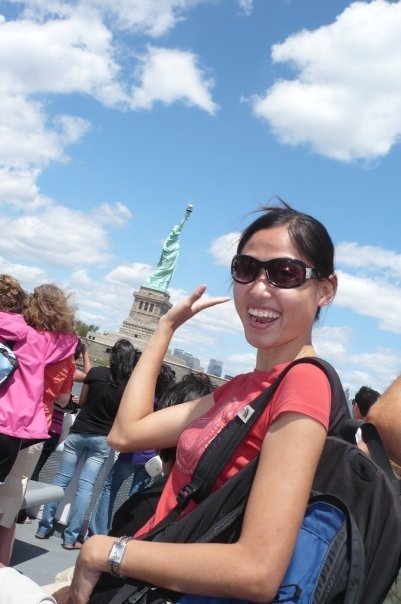
Time flies… Since I came back from my home leave on January 19, it’s been 15 weeks for me to stay in Sudan. It’s time to take a break again but this time I’m going to go to the US.

Although this is not the first time for me to go to the US but somehow I’m always excited! 🙂

Boston Harbour

Capitol Building

This time I plan to travel to several states including New York, Massachusetts, Florida, Connecticut, and Washington DC.

A three-day Carnival Imagination cruise to Half Moon Cay island of the Bahamas will be the highlight of my trip this time! 🙂

Stay tuned for the next entries…

Mother Liberty

Hard Rock Cafe Cleveland

I just came back from a 24 hours field trip to Maban County yesterday. Maban County is within Upper Nile State, it’s 205 kilometres to the east of Melut County. As usual, we flew with helicopter from Malakal to Melut the day before the Maban trip.

We were five people and driving two vehicles. We departed Melut at 9.30 a.m. and arrived in El-Bounj, the capital of Maban County, at 3.30 p.m. It took us six hours to reach El-Bounj because we stopped over in Jammam, one of the villages of Maban County, to meet the local authority there.

Our aim on this trip was to assess the situation after the Sudan elections which took place a couple of weeks ago.

24 hours mission seemed very short but I was able to see, learn, and experience a lot of things on this trip.

El-Bounj village, the capital of Maban County

El-Bounj market

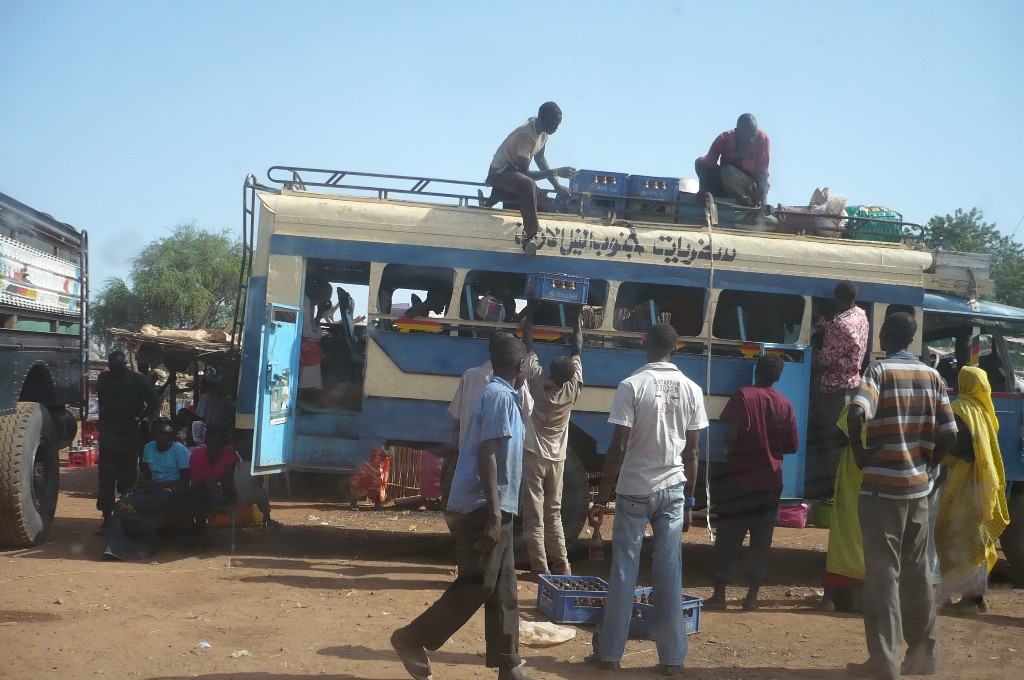
Maban people take this public bus to go from one village to another

Sleeping under the stars…

Everytime I went to the field I always slept in either a tend, a tukul (Sudanese traditional house), or a communal guest house where people just choose their bed and sleep as if we were in the hospital ward.

But sleeping outside under the open sky was just a new thing for me although this culture is not new in Sudan. Most Sudanese sleep outside their house because the weather is too hot (It reached 43 Celsius degrees in Malakal these days). I always tried to sleep inside because I didn’t want to get malaria. Sudan is one of the countries whose highest percentage of malaria.

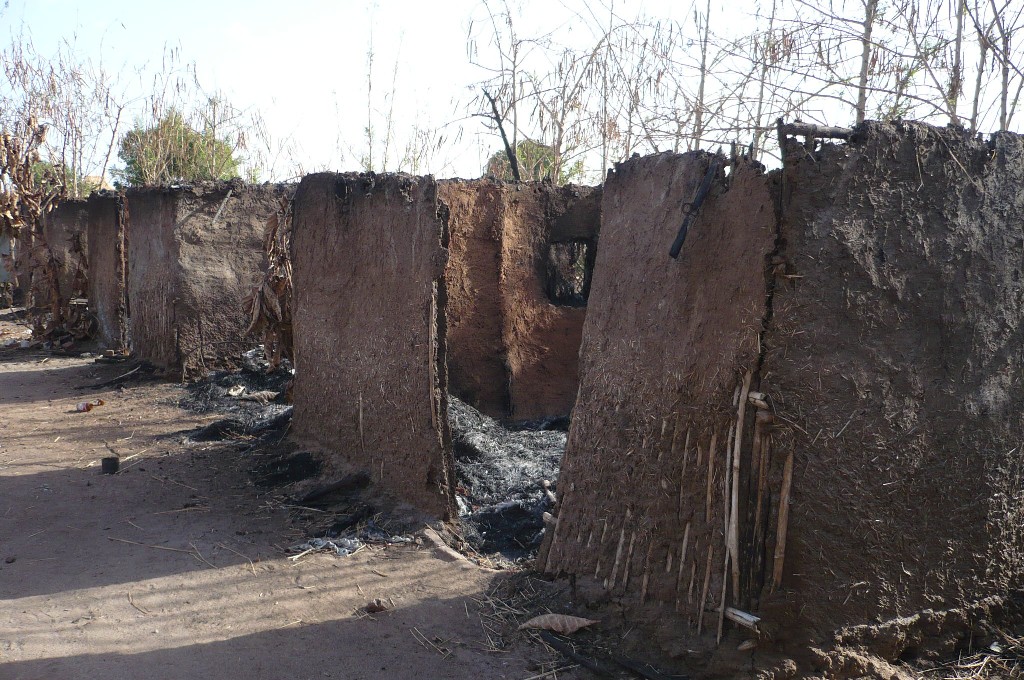
Prior to the trip to El-Bounj, we already planned to stay at UNHCR compound because one of my colleagues had been to El-Bounj before and he stayed at this compound. Unfortunately when we arrived in El-Bounj, we found out that UNHCR compound was just burned down.

Half of its tukuls were turned into ashes and the other half were used as temporary warehouses to safe their remaining stuff.

Half of the tukuls in UNHCR compound were burned down

We were of course still warmly welcomed to stay in the compound but we didn’t have any choice but sleeping in the compound yard. Fortunately that night was a full moon and the weather was a little bit warm so there was not many mosquito around, I pour my body with mosquito repellent though, I didn’t want to take a chance in getting malaria after the trip.

We were preparing our beds in the yard of UNHCR compound

I was lucky enough to always bring my sleeping bag anywhere I go on the field trip so I just slept comfortably inside my sleeping bag that night while experiencing the new method of staying-over in Sudan, sleeping under the open sky and counting the stars.

Me, my bed, & my sleeping bag... Sleeping under the stars!

Breakfast at Jammam’s

For Sudanese, having breakfast is very important and they also have specific time to enjoy their breakfast, 10 a.m.!

On this trip my colleagues and I stopped over in Jammam village to have our 10 a.m. breakfast. We had breakfast at a tea place belongs to a lady called Dawula Dawula. Madame Dawula is a mother of six children and a grandmother of five grandchildren.

Madame Dawula is preparing the tea

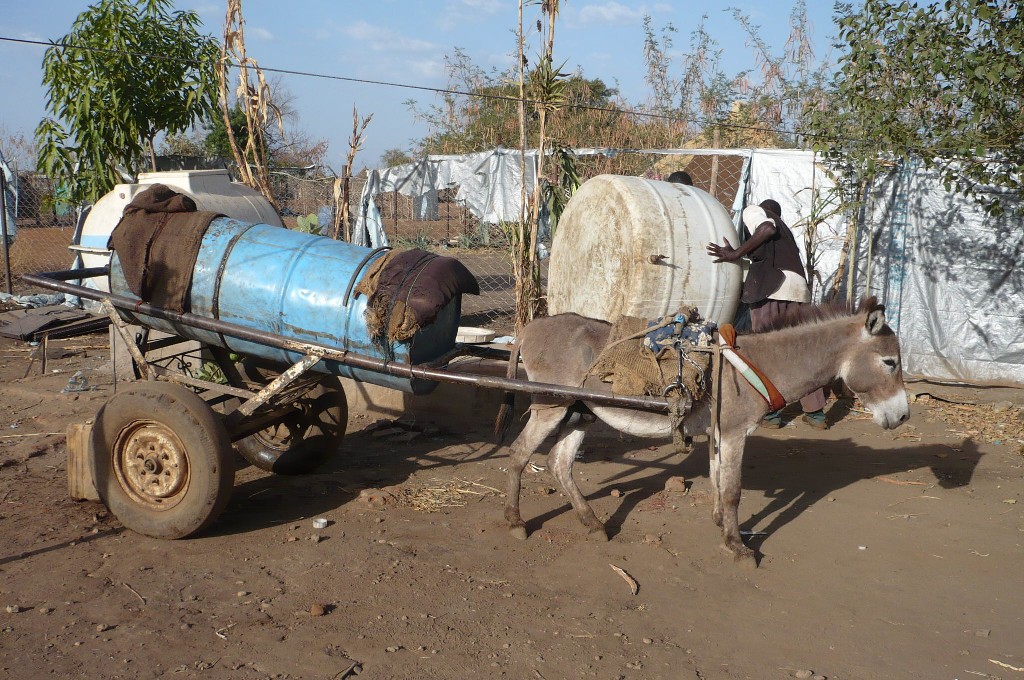
She opens her tea stall everyday from 5 a.m. to 8 p.m. Her husband is working as a porter, he owns a donkey cart to help people to carry anything but mostly clean water. To get clean water in Maban County is not easy, you have to go to the water point and pay 10 Sudanese pounds (USD$4) for a drum of clean water.

10 Sudanese pounds for a drum of clean water in Maban County

Madame Dawula and her husband are originally from Maban but they migrated to Renk County every rainy season because her tea business was not good in Jammam village during that season. “I earn 20 to 30 Sudanese pounds (USD$8-12) everyday during dry season but in rainy season, we have no income sometimes,” said Madame Dawula to me while I enjoyed her ginger-tea.

Sudanese ginger-tea

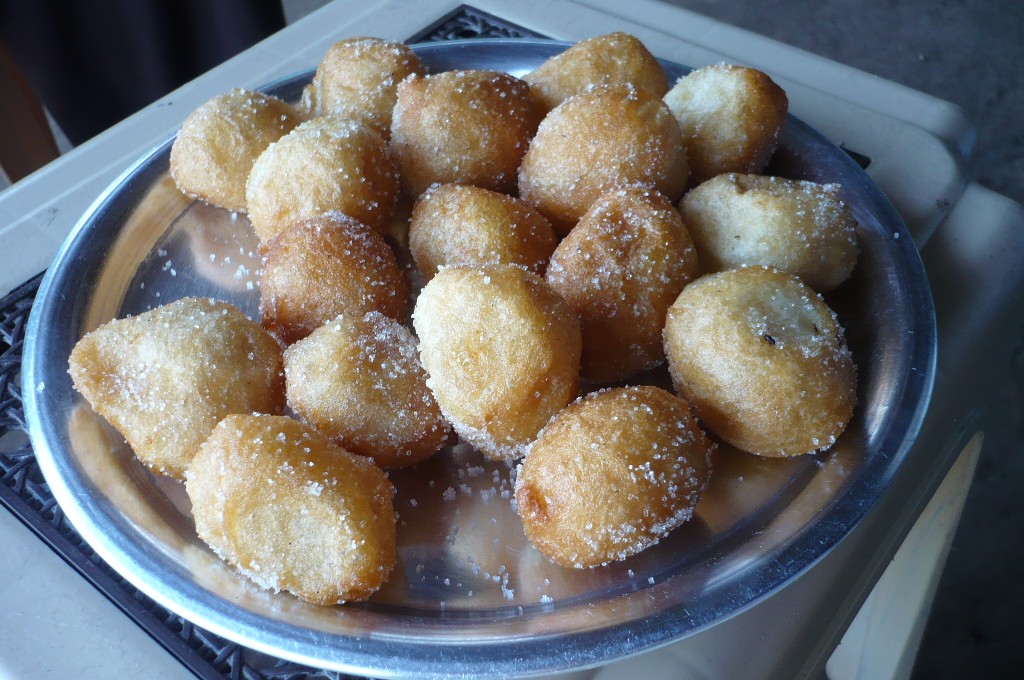
Besides tea, ginger, and coffee, most tea places also served a snack called zalabia. Zalabia is a fried little ball made from wheat and powdered by sugar. Tea and zalabia are just perfect combination as breakfast menu in Sudan!

Zalabia

Riding a camel…

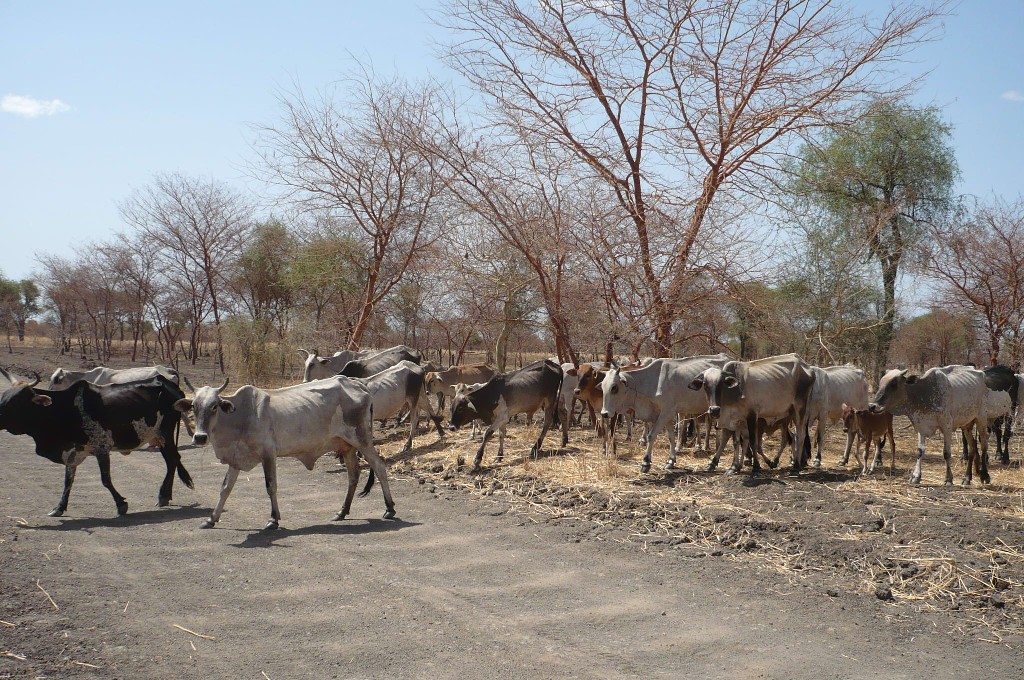
Season of migration is apparently very popular in Sudan. It’s not only for the animals but also its people. In Sudan, to have hundreds or even thousands of goats, lambs, cows, bulls, camels, is more than anything. And if someone owns a lot of livestock he won’t be able to stay put in one place, he would move around looking for areas where his livestock can eat grass. In Sudan, they call this kind of person as a nomad.

Most nomads in Sudan are Arabic tribes and they are coming from the North. They usually migrated to the South for cattle grassing every November and returned to the North again in July.

Nomads from the North migrated to the South every November to July for cattle grassing

According to the local authority in Maban County these nomads never disturb locals and locals always welcome them as long as their animals don’t eat somebody else’s garden.

This was the first time in my life to see with my own eyes these nomads moved along with all their thousands of livestock. The group was really huge, how amazing! I wondered whether the owners would notice if one of their bulls got stolen.

Cattle grassing

Season of migration

Nomad's bulls

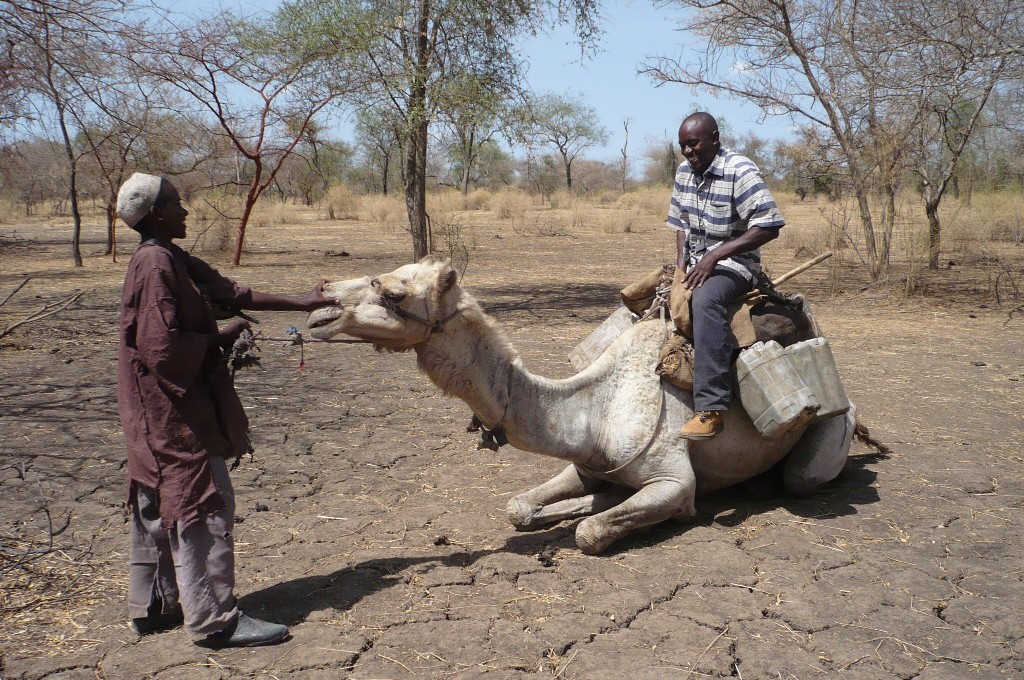
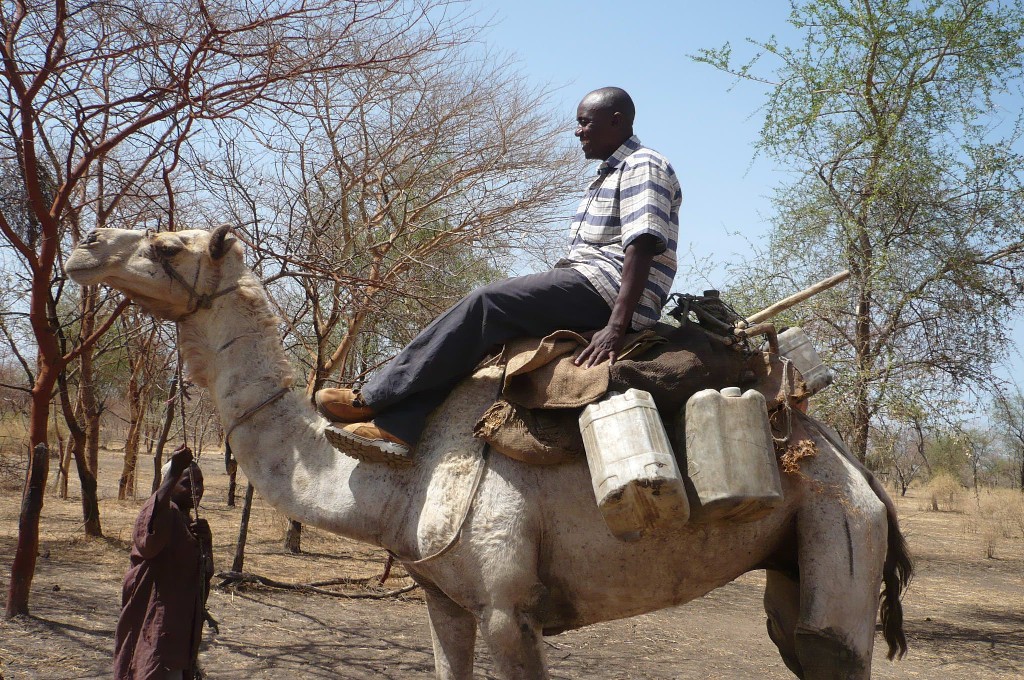
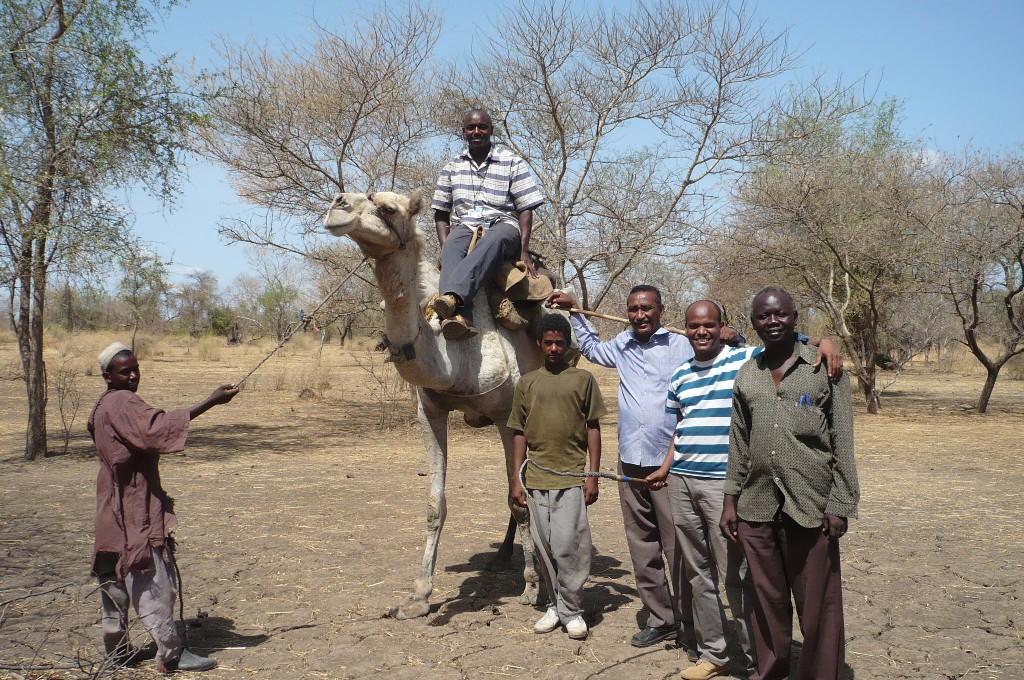
We stopped by to say hello to one nomad’s family and my colleague, ED, even dared himself to ride their camel (helped by the nomad’s father of course).

My colleague, ED, tried to ride a camel

ED was successfully riding a camel!

Trip to Maban was definitely fun and adventurous for me! I would never get this opportunity anywhere else but Sudan. Some people may think we were miserable sleeping under the sky but one thing for sure, this kind of experience is one of the things that you would never forget till the rest of your life!

My colleagues, ED, AA, SA, & PD, posed with a nomad's family (father & son) & their camel

via ReliefWeb Sudan: Ballot box retrieval begins in Upper Nile

Source: United Nations Mission In Sudan (UNMIS)

Date of publication: 19 April 2010

The copyright of this story solely belongs to UNMIS. If you are interested to republish it please contact unmis-insudan@un.org for permission.
Malakal’s water woes

I wrote this story for “In Sudan” magazine April 2010 edition. You can find this article on page 6 of the full magazine below.

Though they live beside the banks of the Nile River, Malakal residents still find access to clean water a daily challenge.

In 2007, the Government of Southern Sudan (GoSS) established a unit called the Urban Water Department within the Upper Nile State government’s Ministry of Physical Infrastructure to improve water supply in the city.

“We have been supplying up to 6,000 cubic metres per day to residents,” said Urban Water Department’s Deputy Director Peter Nhia Gai.

But the majority of Malakal residents continue to use untreated water from the river, according to UNICEF Water and Sanitation Specialist Eissa Mustafa.

“The 6,000 cubic metres of clean water are not enough for the entire population of Malakal,” noted Mr. Mustafa. The 2008 Sudan Population and Housing Census estimated the population of Malakal County at 126,483.

“The distribution network is not well established,” he said. “There are so many households (without) clean water connections.”

The city’s Central Water Station, currently under renovation, distributes water to three points known as Dar Salam, Central Malakal and North Malakal.

Malakal girl carrying jug from water point.

 Built in 1937, the station and its network supply infrastructure collapsed during the country’s second civil war. The aging water station failed to resume full operations until the founding of the Urban Water Department three years ago.

The United States Agency for International Development provided a new pump and water treatment chemicals to the department, which now relies on government funds for its day-to-day operations.

“The funding is only enough to pay the employees and to buy fuel to run the water station from 6 a.m. to 12 noon,” said Mr. Gai of the department. “We are supposed to run it for 12 hours.”

He added that the government has also been unable to provide water treatment chemicals like chlorine and aluminium sulphate.

The department charges a monthly fee for its service. “Each household with access to tapped water pays 15 Sudanese pounds per month,” said Mr. Gai. “However, this amount has not been enough to cover the cost of operations.”

The Urban Water Department has received support from different development partners. UNICEF, which tried to renovate the Central Water Station in 2003, supplies water treatment chemicals to the department and runs a chlorination project that teaches local residents how to treat the Nile River water.

Water treatment unit, Malakal.

The UN agency supplies the city with 80,000 litres of clean water each day through two distribution points in the Upper Nile State capital, according to Mr. Mustafa.

It has also installed water distribution pipes and donated clean water tanks to schools and hospitals.

The French non-governmental organization Solidarités has opened eight water distribution points in Malakal since it commenced operations in the city in 2007.

Solidarités treats the water and delivers it by truck to distribution points on a daily basis.

“We supply on average 2,000 to 5,000 litres of water every day,” said Solidarités Programme Manager Julien Racary. “Each water point has a different capacity depending on the needs of the community.”

When the renovation of the water station is completed, said Mr. Gai, it will be capable of supplying 10,000 cubic metres of water each day.

But there is no such thing as a free lunch, especially when it comes to H2O. The department official says the cost of the service to consumers may more than double at that point to 40 Sudanese pounds a month.

The copyright of this story solely belongs to UNMIS. If you are interested to republish it please contact unmis-insudan@un.org for permission.

Sudan elections is officially over today and I’m happy that the overall situation during the balloting was peaceful, at least that’s what happened in Malakal town, the capital of Upper Nile State in Southern Sudan.

I’m grateful that I got privilege to be one of accredited media who could cover the Sudan elections. I had freedom to visit every polling centre in Malakal and the whole counties in Upper Nile State, taking photos, and interviewing people.

The first Sudan multy-party elections after 24 years

This experience was completely different than what I had in Afghanistan back in 2003/2004 when I became a Publications Officer for UNDP Voter Registration and Election Project for Afghan presidential election. I was allowed to cover the election but it was very limited due to security threat.

This was the first multi-party elections in Sudan after 24 years. I was very excited to be able to go and witness this historical event with my own eyes! However, the weather remains a challenge in Sudan. I have never experienced the heat like in Sudan! If you want to get your skin tanned within minutes, just go to Sudan.

Umbrella is definitely needed to prevent too much heat!

The good thing when I covered the elections in town is I got a chance to do small culinary tour. On the first day of elections I had lunch at Ethiopian restaurant which I didn’t do it for a long time. Ethiopian food is one of my favourite food such as Injera, the sourdough pancake-like/large thin flat bread of Ethiopia made from the Teff cereal, and Kefta, the Ethiopian Spiced ground beef kabob.

Me & my lunch, Ethiopian food!

On the second day I was invited by my local colleagues to have lunch at local restaurant. We had traditional Sudanese food which was made from flowers, wheat, and vegetable. I don’t remember its name but I recall my colleague called it a “Shiluk food” (Shiluk is one of the tribes in South Sudan).

Shiluk food

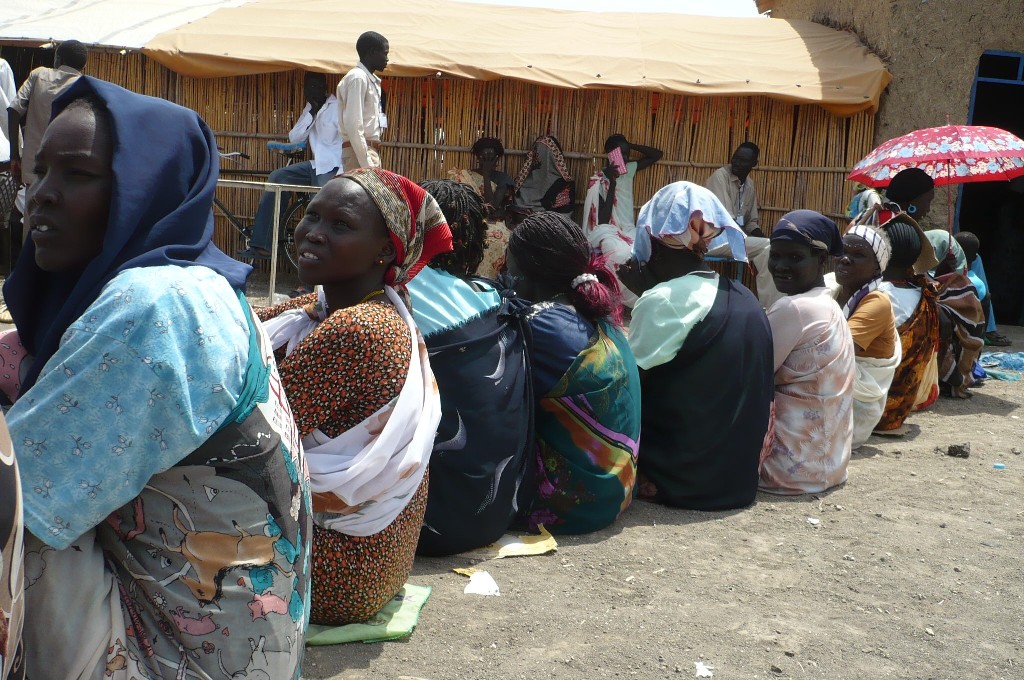
When I went to the polling stations on the first and second days, I saw the excitement of the voters. They came to polling centre at 6 a.m. and in fact the balloting was scheduled to start at 8 a.m. The first day was a little bit chaotic because the ballot papers and boxes were delivered late to the polling centres due to logistical problem so most polling centres started very late between 10 a.m. and 3 p.m. Some of them even decided to open on the second day instead.

Queue at 6 a.m. to vote!

On the second day, the voters didn’t seem to lose their enthusiasm, they didn’t mind to line up under the sun for hours to wait for their turn to vote. There was this old man lined up in Tharawa polling centre. The Abuna (old man)’s name is BA, he is 80 years old and has voted several times in his life. “I have voted several times but I don’t remember when except the one in 1986 and now,” said Mr. A.

Line up under the sun

The man who was retired from his work as a Forest Oversee Officer six years ago said that back in 1986 he voted in Malakal.

BA came to the polling station to queue at 9 a.m. because he was very eager to vote, “I’m going to vote someone who has been very active to work and is going to bring Sudan into a good future.”

The Abuna was finally being called to cast his ballot at 12 noon and he was helped by one of the polling centre’s officers witnessed by political party’s accredited representatives. “1986 elections didn’t have a lot of ballot boxes as we have now,” Mr. A compared, “Although the process was complicated but I’m very happy to finally be able to vote and I urged all my six children to vote too.”

The Abuna casts his ballot

If there was an old man who has voted several times, there was also a middle 40 year-old lady who surprisingly has voted twice in her life. She is a teacher of Boys Banderi Primary School, her name is MP. “This will be my second time to vote. I voted for the first time when I was still in the senior grade of secondary school back in 1984,” said Ms. P whose name listed as a voter in Lelo constituency in Central Malakal. 1984 elections was a single-party elections to People’s Assembly in Sudan.

"I’m voting hoping that the future leader will bring us into a better future."

The teacher who teaches social science said that there is the difference in her motivation to vote back in 1984 and now (2010). “Before, I went to vote without any goal. I didn’t know the real meaning of the elections because I was still very young,” explained Ms. P, “Now, I’m voting hoping that the future leader will bring us into a better future and a good change such as providing more schools, health centres, and clean water.”

Sudanese voted for a better future

BA and MP may have come from two different generations. However, they have the same hope that the future leaders of Sudan should bring a better future for their people and the country.

The historical Sudan elections 2010

I had this short field trip was actually a month ago when I covered the visit of the newly appointed UNMIS Deputy Special Representative of the Secretary General (DSRSG) of Humanitarian Affairs, GC, in Southern Sudan including Malakal and Dolieb Hill, the nearest village of Malakal.

In Dollieb Hill, DSRSG visited medical centres, refugees’ way station, clean water project and the market… Yeah, I was particularly interested in Dollieb Hill market, it was impressive for a small village!

Dollieb Hill market along the Nile River

Dollieb Hill is a village within Upper Nile State where most of its population are Internal Displaced Persons (IDPs) from Canal village which is not too far away from Dollieb Hill, it was just 30 minutes crossing the Nile River.

Fresh fish from the Nile River

The main livelihood in Dollieb Hill is fishing and farming. These IDPs are supported by Food and Agriculture Organization (FAO) in doing “coping mechanism” where they will be fishing during dry season and cultivating on the rainy season. They have done this in order to survive, at least they won’t be having food shortages.

A lady sells sun-dried fish in the market

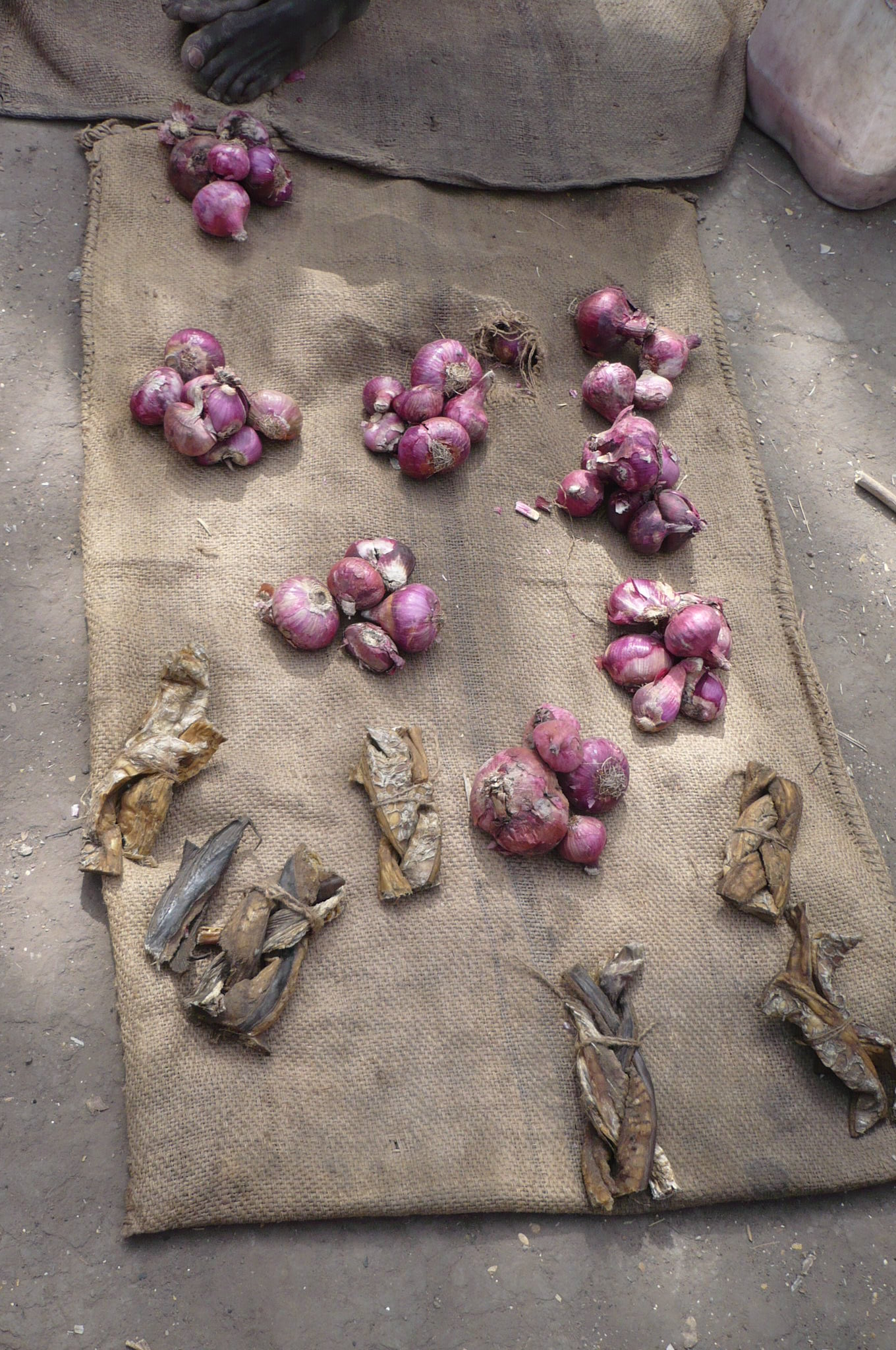
They also sell some of their fish and vegetables in the local market. They have small market opened everyday a long the Nile River. I was very impressed with the variants that they sell. I saw fresh fish from the Nile, sun-dried fish, green vegetables, tomatoes, onions, ocras, and even chicken eggs! The conditions of those vegetables were fresher than what I found in Malakal because they grew those vegetables in their own farms.

Onion is one of the important ingredients for Sudanese. They almost eat everything mixed with onion!

I was happy to know these IDPs can survive in the land of stranger by providing their own food. They knew that they can’t count on food distribution from UN agencies and/or non-govermental organizations forever. They have to find a way to survive until they are able to return to their homeland. 

via UNMIS website Sudan: A town rises from the ashes

Source: United Nations Mission In Sudan (UNMIS)

Date of publication: 14 April 2010

The copyright of this story solely belongs to UNMIS. If you are interested to republish it please contact unmis-insudan@un.org for permission.

I took this photo yesterday when I covered the second day of Sudan elections in Malakal of Upper Nile State capital in Southern Sudan and it has been picked up by UNMIS as one of its featured photos on its website this week.

My elections photo got chosen as one of featured photos on UNMIS website

The original photo:

Voters queuing for their turn

via ReliefWeb Sudan: Malakal voters hope for post-election peace.

Source: United Nations Mission In Sudan (UNMIS)

Date of publication: 11 March 2010

The copyright of this story solely belongs to UNMIS. If you are interested to republish it please contact unmis-insudan@un.org for permission.